
If you’re considering buying a home in Costa Rica, particularly in coastal areas like the Papagayo region, one of the first things you’ll notice is that the houses look and feel different. A North American buyer, accustomed to wood-frame construction, might step into a home built of concrete and steel and wonder about the quality and standards. The reality is that local construction methods are a direct, intelligent response to the tropical climate, seismic activity, and available materials—not a reflection of a lower standard, but a different one perfectly suited to the environment.
Understanding the "Why" Behind Costa Rican Construction
The choice of building materials in Costa Rica is driven by practicality and resilience. Builders here are not just constructing homes; they are engineering structures to withstand specific environmental pressures. From the constant humidity and intense sun to the seasonal rains and the ever-present reality of earthquakes, every element of a home is designed with longevity and safety in mind. Understanding this foundation is the first step to appreciating the quality and thought that goes into a well-built Costa Rican property.
Common Construction Methods in Costa Rica
The structural systems used in Costa Rica directly address the most common questions about building materials and durability. The choices are deliberate, proven over decades to be the most effective for the region.
Concrete Block and Poured Concrete: The Local Standard
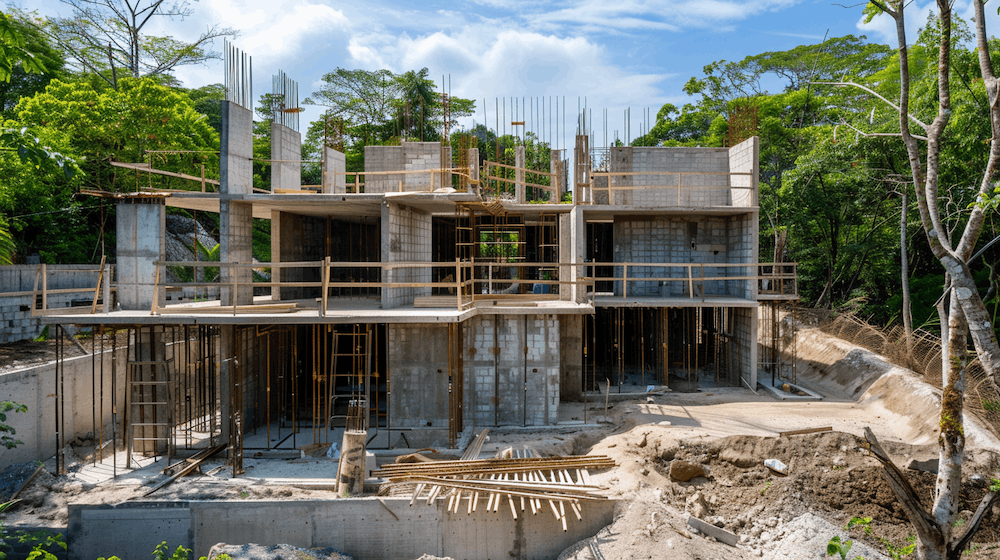
The vast majority of homes in Costa Rica are built using concrete masonry. This method is preferred primarily because it is highly resistant to the tropical climate's humidity, rot, and destructive pests like termites. Unlike wood, concrete does not warp or decay in the moist environment.
Furthermore, concrete has excellent thermal mass properties. The thick, solid walls absorb heat during the day and slowly release it overnight, helping to keep interiors significantly cooler without constant reliance on air conditioning. This inherent durability and climate-control benefit make concrete the most logical and prevalent choice for residential construction.
Steel Framing: A Modern and Durable Alternative
In recent years, galvanized steel framing has become an increasingly popular choice, often used in combination with concrete. This method offers several key advantages. Steel provides engineering precision, allowing for perfectly straight walls and square corners. Construction can also be faster and produce less waste than traditional block-and-mortar methods.
Crucially, steel-framed structures are exceptionally resistant to seismic forces. The material's ability to flex without breaking makes it an ideal component for earthquake-resilient design. It is also impervious to termites and rot, sharing the same pest-resistant benefits as concrete while offering a more lightweight and versatile structural solution.
How Homes Withstand Costa Rica's Climate and Seismic Activity
Every aspect of construction in Costa Rica is designed to handle the country's unique environmental challenges. The designs you see are a direct result of engineering for safety and longevity.
Seismic-Resistant Design and Building Codes
Yes, homes in Costa Rica are built to withstand earthquakes. Because the country sits on the Pacific Ring of Fire, it has developed one of the most stringent and well-enforced seismic building codes in Latin America. The code mandates specific engineering principles to ensure structures can withstand significant ground motion.
This is achieved by using reinforced concrete and steel to create structures that are both strong and flexible. Concrete columns and beams are heavily reinforced with steel rebar, and foundations are designed to move with the earth rather than fight against it. This "ductile" design allows the building to sway and absorb energy during an earthquake, preventing catastrophic failure. The enforcement of these standards is rigorous, ensuring that new constructions meet these critical safety requirements.
Coastal Considerations in the Papagayo Region
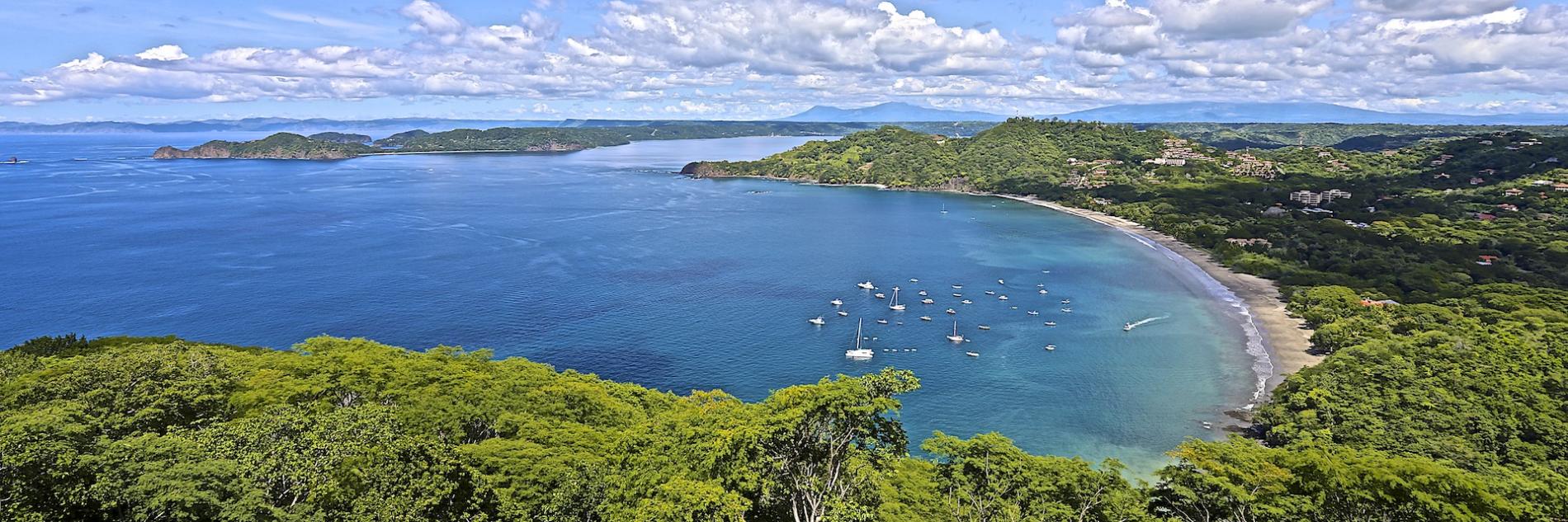
The coastal environment of the Papagayo region, including areas like Playas del Coco and Playa Hermosa, presents its own set of challenges. The combination of salt-laden air and high humidity is highly corrosive to many building materials.
Here, material selection is critical for long-term durability. Builders use galvanized or stainless steel to prevent rust, high-quality aluminum for window frames that won't corrode, and corrosion-resistant finishes on all metal fixtures. Proper ventilation is also a key design element, promoting airflow to reduce interior humidity and prevent the growth of mold and mildew. These considerations are vital for minimizing maintenance and protecting the value of a coastal property.
Common Building Materials and Finishes
Beyond the core structure, the materials used for finishing a Costa Rican home are chosen for their function and durability in the tropical climate.
Roofing Systems for Tropical Sun and Rain
The two most common roofing materials are traditional clay tiles (tejas) and modern layered metal roofing systems. Clay tiles are heavy, durable, and excellent at reflecting solar heat, helping to keep the home cool. Their overlapping design is also effective at shedding the heavy rainfall of the green season. Metal roofing, often constructed in multiple layers with insulation, is also highly durable, reflects heat, and can be engineered to withstand high winds. Both are proven, long-lasting solutions for the tropical climate.
Walls, Floors, and Windows
Inside a typical Costa Rican home, you will rarely find drywall or carpet. Walls are generally solid concrete block finished with stucco (or render), which is durable and easy to maintain. This finish may be applied to both interior and exterior walls.
Flooring is almost universally ceramic or porcelain tile. These materials stay cool to the touch, are impervious to humidity, and are incredibly easy to clean—a significant benefit in a climate with sand and moisture. Windows are typically made with aluminum frames and single-pane glass, as the priority is corrosion resistance and airflow rather than insulation against cold.
How to Evaluate Construction Quality
With an understanding of local methods, you can begin to assess properties with a knowledgeable eye, focusing on what truly matters in this environment.
Comparing Construction Standards: Costa Rica vs. North America
It’s essential to shift perspective: a concrete home is not inherently better or worse than a wood-frame one; it is simply better suited to its environment. While the materials differ, the underlying principles of structural integrity and safety are paramount in both regions. Costa Rican building codes are robust, and in planned developments and modern condominium complexes, construction standards often meet or exceed international benchmarks. The focus is on a different set of priorities—seismic resilience and moisture control rather than insulation for cold weather.
Property Inspection Checklist: What to Look For
When viewing a property, pay attention to key indicators of quality and maintenance:
- Water Management: Look for proper drainage away from the foundation. Check for well-maintained gutters and downspouts.
- Signs of Moisture: Inspect interior ceilings and the base of walls for any water stains, peeling paint, or signs of mold.
- Condition of Metal: Examine metal gates, window frames, and fixtures for signs of rust or corrosion.
- Concrete and Stucco Quality: Look for major cracks in walls or floors. Hairline cracks in stucco are often cosmetic, but large, structural cracks warrant professional inspection.
- Ventilation: Ensure the home has good airflow, with screened windows or vents that allow for cross-breezes.
Long-Term Maintenance and Due Diligence
Making an informed decision requires looking beyond the initial purchase to the long-term implications of the home’s construction.
How Construction Affects Insurance and Maintenance Costs
The prevalence of reinforced concrete construction has a direct financial benefit. Because these homes are highly resistant to fire, pests, and severe weather, insurance premiums are often significantly lower than for wood-frame structures. However, coastal properties require diligent maintenance. Regular painting with high-quality elastomeric paint helps seal the exterior, and routine checks of metal components and roofing are essential to prevent small issues from becoming costly problems.
Essential Questions to Ask Your Home Inspector
When you hire a professional for a home inspection, they should be your most valuable resource. Empower them to do their best work by asking specific, informed questions based on what you’ve learned:
- Can you confirm the structural system is resistant to corrosion, such as reinforced concrete block or steel frame?
- What is the condition and type of the rebar used in the concrete? Is there any visible corrosion?
- How has the property been sealed against water intrusion?
- What is the age and condition of the roof and its fastening system?
- Are there any signs of past or present termite activity?
- Does the building's design show clear considerations for seismic resistance?
By understanding the logic behind Costa Rican construction, you can evaluate properties with confidence, recognizing that a well-built concrete and steel home is a durable, safe, and intelligent investment perfectly designed for life in paradise.